Exark Beginner Guide - Food, Flight Time and Your First Stable Ark
Learn how to start Exark, stabilize Food, choose early buildings and crew, read route risk, and survive your first ark voyage in version 1.03.
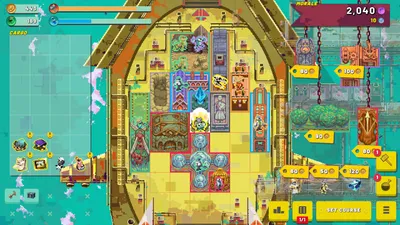
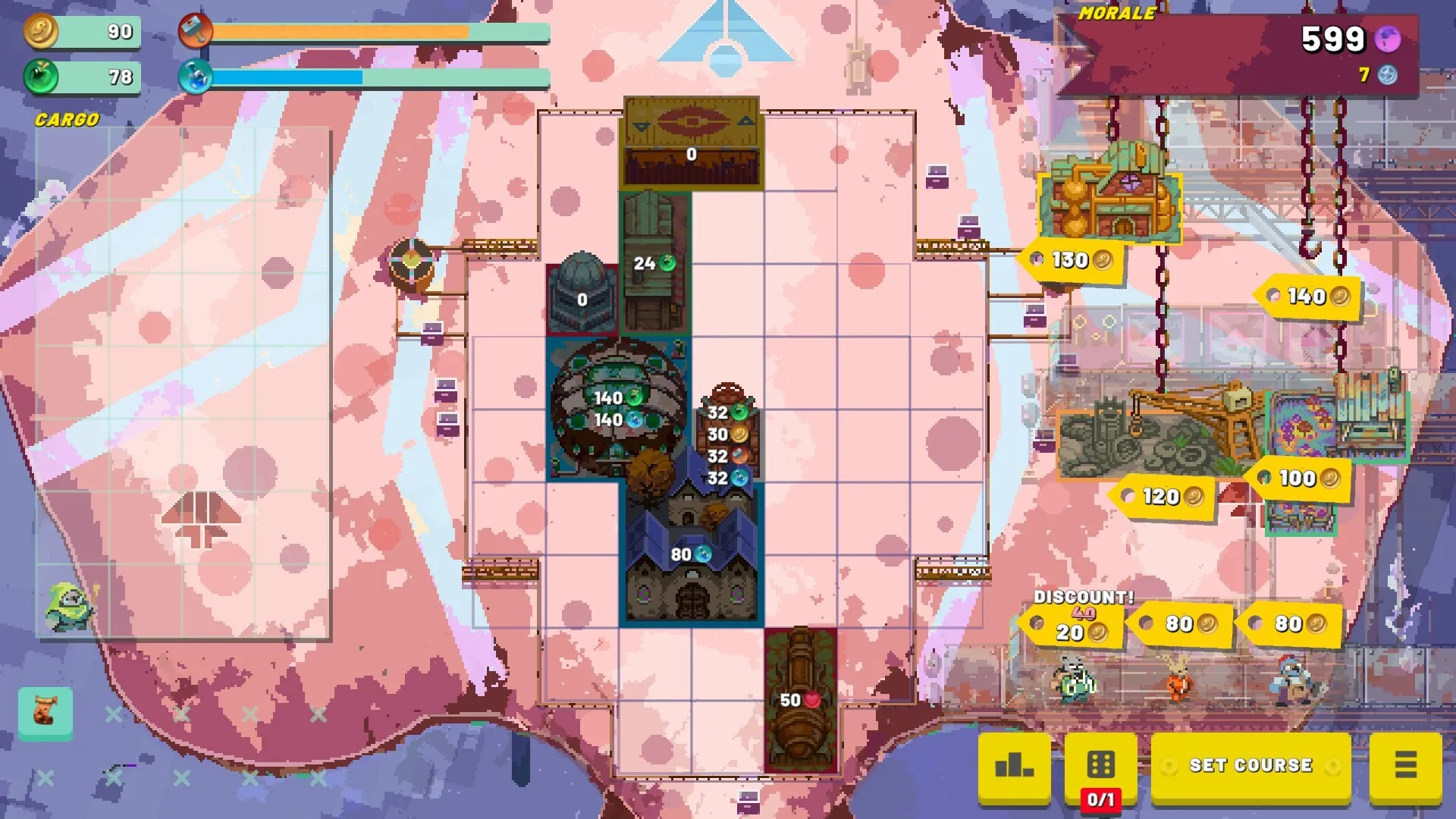
What Is Exark?
Exark is a run-based engine builder and auto-battler where you command a gigantic ark-ship. Your goal is to lead your people to the rim of the world, away from a corrupted sun. Each voyage asks you to construct buildings, hire crew, choose routes and turn a small resource engine into a ship that can survive combat.
Unlike a traditional city builder, Exark is run-based. Every voyage is a new strategic puzzle. The map offers different destinations, rewards and risks, so a good beginner build needs to be adaptable rather than copied tile for tile.
Exark’s Four Core Resources
| Resource | Beginner meaning | What to watch |
|---|---|---|
| Food | Fuels building cycles | A surplus speeds cycles; a deficit can stop the engine |
| Production | Helps construct buildings | More buildings also increase the Food burden |
| Inspiration | Helps hire or unlock crew | Crew is powerful only when assigned to the right job |
| Gold | Buys buildings, crew or route options | A Food-positive run can still be short on Gold |
Morale is the ark’s practical health bar. Enemy attacks reduce it, while resource production and some military attacks can restore it. Armor helps reduce the damage that reaches Morale.
The beginner loop: Food keeps buildings cycling, Production expands the ark, Inspiration improves the crew, and Gold buys flexibility. Do not expand one part of the loop so far that another part stops.
How to Start Your First Run
1. Pick a House You Can Read
Each Great House has its own ark, buildings and crew identity. House Arioch is a reasonable first choice when you want an engineer and artisan-flavored production loop, while House Mnesis is a useful alternative for players who prefer a resource-abundance angle. The correct choice is the House whose tooltips you can understand and whose starting options match the route you want to test.
Do not judge a House only by its strongest late-game screenshot. On a first run, readable early buildings and a forgiving economy are more valuable than a complicated endgame ceiling.
2. Build Food Before You Build Ambition
Start with a dependable Food source such as a farm or pasture-style building when the draft offers one. The important number is not just the Food produced by that object; it is the net Food after every building cycle that you have already placed.
Recent gameplay videos repeatedly show the same beginner trap: a player adds an attractive workshop, Guild building or weapon while the Food buffer is still thin. The new object consumes the buffer, every cycle slows, and the player loses the output needed to recover.
After each early placement, ask:
- Is Food still positive after the next cycle?
- Does this building speed up the engine or only consume it?
- Will I need the next route reward before I can add another building?
3. Add Production and Inspiration in Layers
Once Food is stable, add one Production source and one Inspiration source. Production lets you take better building drafts; Inspiration creates better crew choices. You do not need the largest possible meter immediately. You need enough output to make the next decision without starving the current engine.
If the next choice offers a strong building but no matching economy, keep the option in mind and take the resource that makes the next two cycles safer. A smaller but reliable engine beats a high-roll draft that cannot activate.
4. Assign Crew Instead of Hoarding It
Crew can improve a building when assigned, provide a tag, occupy a slot or be expended for a one-time effect. New players often keep every crew member unused because they fear wasting one. That also wastes the cycles the crew could have improved.
Assign the first valuable crew member to the building that runs most often or fixes the current bottleneck. Save an expend effect only when it clearly buys a needed resource, upgrade or emergency turn. Always read the tooltip first; patch 1.03 adds a House glyph to House-specific crew and item tooltips, which makes mixed drafts easier to inspect.
How to Choose a Route
Map destinations can offer Food, Gold, relics, schematics, crew or combat. Longer or riskier routes may pay better, but they also give enemies more time to pressure the ark. Nookrium’s and Ash Descends’ runs show why extra flight time should be treated as a cost, not just a number beside the reward.
Use this priority when the ark is unstable:
- take Food or a resource that prevents the next cycle from stopping;
- take a relic when it directly fixes the current bottleneck;
- take Production or Inspiration when the ark can afford one more layer;
- take Gold when the next market or draft is likely to solve a shortage;
- take a high-risk reward only when Morale, Armor and Food can cover the route.
The recent patch makes Hazard more attractive by rewarding successful Hazard-o-Meter runs with 2 Star Shards per 5 Hazard Rating. “Successful” is the key word: a route that ends the run pays nothing useful to a beginner who is still learning the core loop.
Your First Combat Decision
You do not have to turn the first ark into a weapons platform. A pacifist or economy-first route can be a good way to learn the map and resource cycles. If enemies are already taking too much Morale, add a military building before adding another economy layer.
Military buildings need more than a damage number. Check their cycle time, crew requirements, placement rules, Armor support and whether their attack restores Morale. Patch 1.03 adds floating text for Morale gained from attacking military buildings, so use that feedback to compare the weapon’s payoff with incoming damage.
Retromation’s runs show the value of adding a weapon when the route demands it, while Ash Descends’ run demonstrates the opposite lesson: a Food-heavy ark can still fail if its Gold, damage and route length are not balanced.
Common Beginner Mistakes
- Expanding too fast: every new building adds another demand on the cycle engine.
- Ignoring Food net output: read the result after placement, not just the building’s headline value.
- Taking every long route: extra rewards do not help if Morale collapses first.
- Saving every crew member: an assigned bonus can improve many cycles; an unused crew member improves none.
- Placing Immovable buildings in the first open slot: patch 1.03 makes Rite buildings’ Immovable status clearer, but the placement decision is still permanent.
- Deleting without checking tags: use the new T trash hotkey only after checking whether the object enables a trigger, Plus tile or House synergy.
- Copying a video endgame: a creator’s route, draft order and House may be different from yours.
A Simple First-Run Progression
Early Voyage
Build Food, then add one Production or Inspiration source. Keep one or two empty spaces if possible. The goal is a cycle that continues even if the next map choice is mediocre.
Middle Voyage
Assign crew to the most important producer, take one relic that solves a real problem, and decide whether the route needs military damage. Improve the layout before filling every open tile.
Final Route
Stop treating every reward as an invitation to expand. Keep Food, Morale and Armor visible while checking the route’s flight time. If combat is the problem, add a focused weapon package; if the weapon is already safe, use the remaining space to improve cycle speed or survivability.
What a Failed Run Can Teach You
The most useful screen is often the final flight report. Check whether the run failed because it produced too little Food, generated too little Gold, dealt too little damage, or chose a route that was too long for its Morale pool.
Ash Descends’ early run is a clear beginner case: strong Food production did not compensate for a weak overall balance on the final route. Sifd’s much stronger run shows the late-game version of the same idea: high Armor and trigger output can still be overwhelmed by endless enemies and limited space. Read the failure as a diagnosis, not as proof that the whole build idea is bad.
Frequently Asked Questions
What should I build first in Exark?
Build a dependable Food source first when available, then add Production or Inspiration once the Food result remains positive. The exact building changes with the House and draft.
Is Exark better with a pacifist or military build?
Both routes work. Pacifist builds are easier for learning the economy; military builds are useful when attacks would otherwise drain Morale faster than the ark can recover.
How much Food do I need in Exark?
There is no universal target because the number of buildings, their cycles and the route all change. Aim for a positive result after the next cycle and recheck after every major expansion.
What does the T key do?
Patch 1.03 lets you press T while dragging a building, crew member or item to trash it.
Should I take Hazard on my first run?
Take it when the ark can finish the route. The new Star Shard reward is useful, but a failed run cannot convert the risk into progression.
Video research note: The route advice in this guide is an editorial synthesis of the linked public gameplay videos and their auto-generated English captions. It paraphrases run decisions and failure lessons rather than reproducing a transcript. Recheck mechanics after future balance patches.
Verification & sources
Checked against Exark 1.03 · Last updated 8/30/2026
- Source: Official Exark Steam page
- Source: Ash Descends - Exark beginner gameplay
- Source: Nookrium - Exark gameplay overview
- Source: Retromation - Exark gameplay video
- Source: Wanderbots - Exark gameplay video
Related videos


Gallery
Related Articles
crew
Exark Crew Guide - Assignments, Tags and Expend Decisions
Learn how to hire and assign Exark crew, compare repeated bonuses with expend effects, and use crew tags to improve Food, Guild and combat builds.
buildings
Exark Best Buildings - What to Build First
Learn which buildings to prioritize in Exark: Food and Production first, then Inspiration and Gold.
houses
Exark Great Houses Guide - Four Houses and Playstyles
Compare Exark's four launch Great Houses, their official identities, and the evidence to check before choosing a first run.
Was this helpful?
Thanks for the feedback!